Apply for the first cohort
Unlocking untapped ADHD capacity

Where uncracked problems meet the minds built to solve them.

Traditional workflows waste brilliant ADHD capacity on rigid routines and solo overwhelm, while leaving non-linear bottlenecks unsolved.

Argonods turns novel challenges into 72-hour paid sprints that divergent squads actually finish, delivering breakthroughs teams can’t get anywhere else.

Choose your track

I solve

Join an ecosystem built for your brain to tackle real-world challenges.

We challenge

Bring a hard problem that divergent minds will love to crack.

3 to 5 minds

A squad small enough to hear each other, with a role you pick each sprint.

18 micro-deadlines

A weekend, chunked so you always know the next concrete thing.

72 hours

Friday in, Monday out. Four-hour blocks set the rhythm.

70 / 20 / 10

Most of the bounty goes to the people who did the work.

Why this matters now

Three shifts just turned divergent thinking into the ultimate advantage.

For decades, businesses rewarded predictable, linear execution and sidelined non-linear thinkers. Today, that equation has flipped.

Generative AI and conventional workflows have made linear execution cheap, and left complex, ambiguous bottlenecks untouched. At the exact same moment, millions of brilliant ADHD thinkers are sidelined by rigid routines, resume filters, and solo burnout. Argonods turns both failures into a closed-loop advantage.
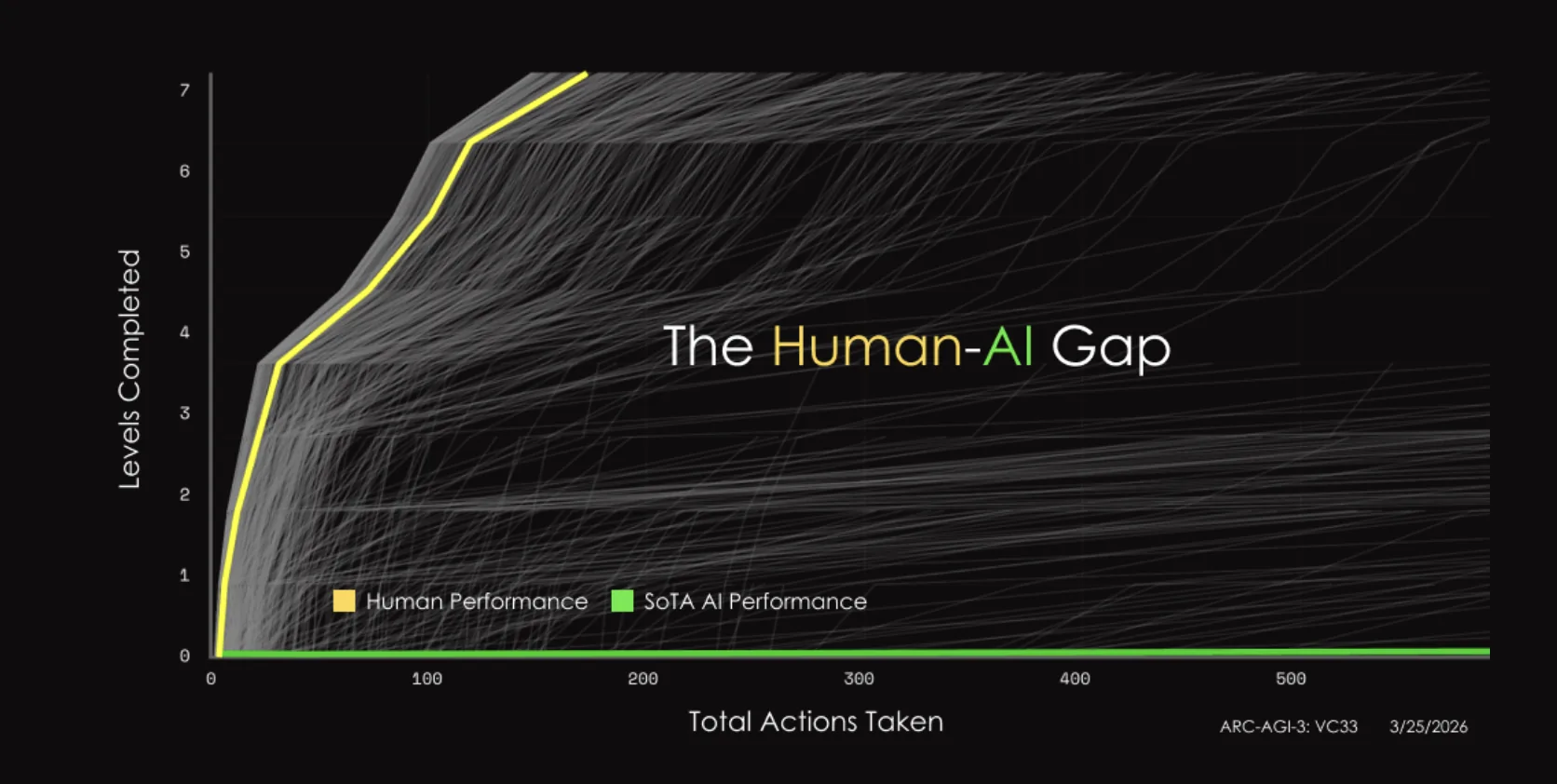
Chart titled The Human-AI Gap, from ARC-AGI-3 environment VC33, dated 25 March 2026. Human performance climbs to seven levels completed within about 170 actions, while state-of-the-art AI performance stays near zero across more than 500 actions.
Source: arcprize.org
01 • The AI ceiling

AI remixes the past. Divergent minds invent the new.

AI can only remix existing elements from past data, and stalls on unprecedented bottlenecks with no playbook. When you face an unfamiliar problem, only human imagination can invent new building blocks, connect unrelated worlds, and create solutions that didn’t exist before.

Source: ARC-AGI-3, ARC Prize Foundation, 2026.

02 • The untapped surge

Record adult diagnosis. Slow workplace redesign.

Millions of capable adults finally understand how their brains work, yet most jobs still force them into rigid routines and isolating workflows. Talent isn’t the bottleneck, environment is.

Source: CDC, MMWR, 2024: 15.5 million US adults have an ADHD diagnosis, about half of them diagnosed in adulthood.

03 • The new competitive edge

AI automated average thinking. Non-linear minds are the new edge.

When every competitor has access to the same AI models and linear playbooks, standard execution stops being a differentiator. Lateral leaps, pattern-breaking ideas, and divergent cognition are now your defensible moat.

The ceiling is real. The talent is ready. The edge is non-linear.
Why did we build Argonods?

ADHD isn’t a knowledge problem. It’s a self-efficacy gap.

You know what to do, you just can’t always get your brain to engage. We exist to break the cycle of executive dysfunction, shame, and self-mistrust.

When you live with ADHD, the hardest part isn’t the distraction. It’s the compounding loop of executive dysfunction and self-mistrust.

You already know how to make a plan. Yet between time blindness, working memory gaps, and task initiation paralysis, even simple tasks feel like pushing against an invisible wall. You hyperfocus brilliantly on high-stakes problems, then drop the ball on routine admin. After years of masking, Rejection Sensitive Dysphoria (RSD), and hearing you just need to “try harder,” you internalise a painful belief: “I know I can do it, but I don’t trust myself to follow through.”

We exist to rebuild that self-trust, not force you into neurotypical molds. Traditional productivity culture relies on willpower, rigid streaks, and all-or-nothing perfectionism. For an ADHD brain, that setup guarantees burnout and reinforces the trap of believing that because a task feels hard, you are failing. Our purpose is rooted in behavioral science and real ADHD neurology. Confidence isn’t built through toxic positivity or empty affirmations. It’s built by:

  • Lowering activation energy to bypass initiation paralysis.
  • Removing environmental friction so follow-through doesn’t depend on willpower.
  • Capturing undeniable mastery experiences that prove your capability over time.

Because when you stop fighting your wiring, you don’t just get things done: you finally rebuild trust in yourself, and show the world what divergent minds can crack.

Unleash.

Sources: Bandura, 1977 (self-efficacy is built most by mastery experiences); Newark, Elsässer & Stieglitz, 2016 (adults with ADHD report lower self-efficacy than controls).

Flash sprints • Real cash bounties

From ADHD friction to flow and alignment.

Built for momentum, not micromanagement. Show up in your browser and solve novel problems in 72-hour sprints.

Anonymous onboarding. No resumes or medical records. Real cash bounties.

Live body doubling

Squads, not isolation.

Join live browser rooms with other ADHD builders. Work alongside peers to start fast and stay locked in, without micromanagement.

72-hour sprints

Real stakes, tight clock.

Bounded weekend sprints create instant urgency. Compete on novel problems with a clear deadline and real cash payouts.

Zero friction

Show up and build.

Anonymous onboarding respects your privacy from minute one. No resumes, no medical records, just pure problem-solving.

Trade isolated burnout for 3-to-5 person squad momentum where structure, pacing, and coordination are handled for you.

Squad 0417Sprint in progress
Hour 44 of 72
Firestarter Hyper-Focuser Synthesizer Substitute, on the bench
Micro-phase 12 of 18

The sprint view every squad member sees: four-hour blocks, the current phase, who is in the room.

3 to 5 minds

A squad small enough to hear each other, with a role you pick each sprint.

18 micro-deadlines

A weekend, chunked so you always know the next concrete thing.

2 sprints a month

Bursts need recovery. We build the gap in.

70 / 20 / 10

Most of the bounty goes to the people who did the work.

Built for unlocking untapped ADHD capacity

The standard work ecosystem wastes ADHD talent.

Slow timelines. Solo silos. Endless admin.

Conventional work settings strip away the exact conditions an ADHD brain needs to fire: live peer energy, tight urgency, and problems worth hyperfocusing on. Your best thinking never gets used because the environment stalls you before you start.

Not a talent gap. A design gap.

We built an ecosystem around how your brain actually unlocks: a live squad instead of working alone, 72 hours instead of open-ended months, and real bounties for putting your full capacity to work.

Zero backlog maintenance. Just show up, collaborate, and get paid for your breakthroughs.

How a sprint runs

Same shape every time, so you never have to decide what to do next. We decide the shape. You do the thinking.

  1. Hour 0

    The brief arrives chunked into its questions.

    The Challenge Owner’s questions are already pulled out, with a first step waiting. No one opens a blank page.

  2. Hours 0 to 4

    Go wide.

    Firestarters run the brainstorm. Voice notes, napkins, bullets all count. Ideas that don’t make it go to the parking lot, not the bin.

  3. Hours 4 to 48

    Go deep.

    Hyper-Focusers take one component each inside a body-doubling room. Cameras optional, talking optional. The room logs itself, so nobody’s asked how it’s going.

  4. Hours 48 to 68

    Pull it together.

    The Synthesizer turns the pile into a structured brief, with dead ends attached. Chaos stays inside. The Challenge Owner sees the clean version.

  5. Hour 72

    Deliver. Get scored.

    The Challenge Owner picks what it’ll use. Every contribution earns XP: yours, never decays, including the ones not picked. No vague rejections. By design.

Start unlocking your untapped ADHD capacity today.

Join free and turn momentum into payouts.

Apply for the first cohort

You pick your role each sprint.

Nobody is labelled at onboarding. ADHD isn’t one cognitive style, and you work differently week to week, so you choose a role before each sprint, with a suggestion from how your last ones went.

Firestarter

Four hours of fast, connected ideas from unrelated fields. The first stretch never sits still.

Hyper-Focuser

One technical or data-heavy component, gone deep for hours. You come back with depth nobody else reached.

Synthesizer

The step that needs tooling. Turns the chaos into a coherent brief, with AI on structure so the thinking stays human.

Substitute

The bench, with the room’s status already loaded. If someone goes quiet, the phase keeps moving and their seat stays open.

You don’t have to do the starting, pacing and finishing on your own.

The room is called ARGONAVIS, and it runs those on the outside so you can bring the part only you can. The problem is the sun, the squad’s thoughts are the stars, and the answer is a moon that fills as the brief comes together.

Body-doubling, built in

Audio and video co-working inside ARGONAVIS, the squad’s room. Cameras optional, talking optional. Presence is the point.

Brain dumps count as work

Speak a voice note, snap a napkin, paste five messy bullets. The AI transcribes and structures it for the squad to review. You never write a formal proposal to be heard.

Eighteen small finishes

A 72-hour sprint runs in eighteen four-hour blocks. Each one ends with something finished or handed on, and every finish earns XP that’s yours and never decays. Leaderboards only if you opt in.

Calm countdowns

One far deadline becomes eighteen near ones. Enough urgency to start, never enough to freeze.

Status writes itself

The room turns activity into a handover log on its own. A substitute arrives pre-loaded. Nobody has to answer “how’s it going.”

Visibility is yours

Camera, presence, what your squad sees and what the Challenge Owner sees: your settings, not ours. Challenge Owners get owner-safe summaries and your pseudonym. That’s it.

ADHD energy follows predictable rhythms.

We build structural guardrails for all of them, so nobody has to rely on willpower.

The drop-off

Adults with more ADHD symptoms report more hyperfocus (Hupfeld et al., 2019). When yours runs out mid-sprint and you go quiet, a substitute carries the phase and your seat stays warm. Rejoin at synthesis and you still earn XP and a completion.

Rejection sensitivity

Adults with ADHD describe criticism as deeply painful (Beaton et al., 2022). Challenge Owners never write free-text verdicts. They score outcomes through a structured rubric, and every contribution logs verified XP, win or lose.

Disclosure risk

In a UK survey, 31% of neurodivergent employees had not told their manager or HR, and 29% of those feared for their career (CIPD, 2024). Solvers and Challenge Owners stay completely anonymous to each other. Your diagnosis never leaves verification. In every challenge, you operate under a pseudonym.

The burst that burns out

You set a baseline capacity when you join. A sprint finished at baseline still counts as finished.

Sources: Hupfeld, Abagis & Shah, 2019 (hyperfocus in adult ADHD); Beaton, Sirois & Milne, 2022 (experiences of criticism in adults with ADHD); CIPD, 2024 (Neuroinclusion at work, survey of 790 neurodivergent employees).

Not for you if:

Still here? Then this is probably for you.

Verification happens later, privately. Withdraw and delete in one tap.

Apply for the first cohort
Argonods architecture

Accommodations patch broken workflows. We engineered an ecosystem where ADHD is the native architecture.

Asked what their ADHD gives them, 206 adults named creativity first (Schippers et al., 2022). Research on divergent thinking finds an edge tied to ADHD traits (Hoogman et al., 2020). In one controlled study, that edge showed up when there was a reward to compete for (Boot, Nevicka & Baas, 2020).

Instead of forcing ADHD talent into slow, open-ended pipelines, Argonods builds INCUP, a model from clinical practice, into every challenge: high-interest problems, novel constraints, bounded 72-hour urgency, live peer co-regulation, and real cash bounties at the finish line.

Sources: Schippers et al., 2022 (self-reported strengths of 206 adults with ADHD); Hoogman et al., 2020 (review of divergent thinking in ADHD); Boot, Nevicka & Baas, 2020 (extrinsic rewards and creative performance); Jackson & MacKillop, 2016 (meta-analysis of delay discounting in ADHD, 21 studies); Eagle, Baltaxe-Admony & Ringland, 2024 (body doubling, survey of 220 people); INCUP (Interest, Novelty, Challenge, Urgency, Passion), an activation model from clinical practice.

  1. 01

    Why “extra time” fails → Bounded 72-hour urgency

    The further away a reward is, the less it pulls: a meta-analysis of 21 studies found people with ADHD discount delayed rewards more steeply than others (Jackson & MacKillop, 2016). Every challenge runs on a fixed 72-hour clock with crisp phase transitions, so the next deadline is always near.

  2. 02

    Why solo queues stall → Live squad co-regulation

    In a survey of 220 people, most of them neurodivergent, three in four used body doubling, the presence of others, to start and stay on tasks (Eagle et al., 2024). Matched squads of 3 to 5 create ambient accountability and shared momentum, without micromanagement.

  3. 03

    Why unpaid sprints lose focus → Verified cash bounties

    In one controlled study, adults with ADHD produced more original ideas only when competing for a reward (Boot, Nevicka & Baas, 2020). Challenge Owners fund real bounties, and a structured rubric turns hyperfocus into recognised value.

Paid, verified, anonymous.

  • 1. Completion over perfection. We measure personal follow-through, not raw output volume. Finishing a challenge at your baseline capacity counts as a full win, and so does stepping back in as a reviewer.
  • 2. Two tiers, one community. Verified members compete in paid challenges. If you are still on a diagnostic waitlist, or score positive on the WHO ASRS v1.1 screener, you can join practice challenges on real nonprofit problems right away and unlock paid challenges once verified.
  • 3. Verification without a paper trail. A one-time link goes to your clinician or ADHD association, bound to their registration number or official attester account. They click to confirm; we log only that verification happened. No medical records stored, nothing ever shared.
  • 4. Anonymous to Challenge Owners. Your real name, employer, and diagnosis never enter a challenge room. Health data is handled strictly under GDPR, with consent you can revoke in one tap.

How a bounty is split

70%
20%
10%
  • 70% to the squad. Split evenly across active members, so nobody hoards ideas or competes against teammates.
  • 20% to the pivot. Awarded by squad vote to whoever unlocked the breakthrough direction.
  • 10% to the platform. Funds squad matching, live rooms, AI structuring, and compliance.

Challenge Owners pay separate listing fees, never deducted from your bounty. XP is completely separate from cash: personal, never decaying, and never ranked on a public leaderboard unless you opt in.

You’re joining the founding cohort.

The rules are being co-written right now by a founder with ADHD, Portugal’s ADHD association BRAINSTORM, and our first wave of solvers.

No fake stock quotes here. The stories on this page will come from the real people you sprint alongside, published the week the first challenge finishes.

Claim your founding spot

Two questions. Takes 20 seconds. We email you when your cohort opens. Nothing you type here ever reaches a Challenge Owner.

No resume, no portfolio, nothing to install. We ask nothing about your diagnosis here; the tier question comes after explicit consent, inside the platform. You can withdraw consent and delete everything in one tap.

Unlocking untapped ADHD capacity

Drop a hard problem Friday. Interrogate ADHD breakthroughs Monday.

A matched squad of 3 to 5 ADHD minds. 72-hour sprints. On Monday, you don’t just get a static document: you get ranked concepts, mapped dead ends, and a living brief your team can question at any time, for a fraction of a consultancy discovery phase.

Per-challenge pricing. First challenge needs no subscription. Double-blind by default.

Friday, 18:00

Problem in.

Anonymised, under NDA, its questions pulled out before any solver sees it. Your brand never reaches the squad.

Saturday to Sunday

Squad cracks it.

Three to five minds working in structured, facilitated sprints, tailored to ADHD minds. You see owner-safe status lines, nothing raw.

Monday, 18:00

Living brief back.

Ranked concepts, mapped dead ends, and an interactive brief your team can interrogate for follow-ups, pseudonymous and compliance-cleared.

One framework. Your legal team reviews it once.

Expert networks win enterprise contracts on compliance. So does this. Everything that would otherwise be a vendor negotiation is enforced inside the platform, so your legal team doesn’t chase it per challenge.

NDAs signed once, inside the platform

Your legal team reviews one agreement, not one per person.

Double-blind by protocol

Your brand never reaches the squad. The squad never reaches you. Insider and conflict-of-interest risk is structural, not policy.

Sandboxed, moderated material

Voice notes, sketches and chat stay inside the sprint sandbox. Automated moderation screens what leaves it. You receive the brief and owner-safe status, nothing else.

GDPR-grade solver data

Identity lives in a vault separate from the workspace, under explicit consent, with a DPIA prepared before the first paid challenge. You never hold a solver’s identity, so you never carry that risk.

Why you don’t see Challenge Owner logos yet. The protocol that protects you also forbids us from naming you. We share anonymised sample briefs and sprint statistics instead.

Legal can say yes. Now bring the problem.

Per-challenge pricing. First challenge needs no subscription.

Challenge a squad

Models remix what exists. Squads recombine what doesn’t.

On ARC-AGI-3, the novel-problem benchmark launched by the ARC Prize Foundation on 25 March 2026, every frontier model scored under 1%. Untrained humans solved all 135 environments. The test is abstract and the scores will rise. But it says one thing clearly: when a problem has no precedent, people still find the pattern first.

Argonods selects and arranges people for exactly that kind of problem. AI handles the admin. Humans handle the thinking.

The human-AI gap on one ARC-AGI-3 environment

Chart titled The Human-AI Gap: levels completed against total actions taken on ARC-AGI-3 environment VC33, 25 March 2026. Human runs rise to all seven levels within about 175 actions; the state-of-the-art AI line stays flat at zero past 550 actions.

Environment VC33 at launch, 25 March 2026. Yellow is human performance: all seven levels cleared in under 200 actions. Green is the best frontier model: no level completed in over 550 actions. Chart by the ARC Prize Foundation. Frontier models were tested through their public APIs without custom tooling, and scores will move as the 2026 competition runs.

Raw lateral thinking, polished for the enterprise.

You get the non-linear breakthroughs corporate environments tend to suffocate, delivered as a brief your board can read. Four mechanisms make that possible.

AI-shielded workspaces

Our AI doesn’t do the thinking; it protects it. It transcribes voice notes, tracks the four-hour blocks, structures messy brain dumps and runs compliance checks, so the squad spends its energy on your problem.

Roles chosen, squads composed

Each solver chooses a role for the sprint: Firestarter for high-velocity ideation, Hyper-Focuser for deep execution, Synthesizer for the brief. We compose squads so the roles cover each other, and add relevant background only when your problem needs it.

Dead ends included

Every idea the squad set aside is parked, not deleted, and attached to the brief as a dead end explored. Your team doesn’t repeat the work.

Structured feedback, both ways

You select elements and pick a feedback line from a menu: will pilot, strong but not now, needs more evidence, not a fit. Two minutes for you, a structured answer for the squad, never a verdict.

How a sprint compares
CriterionExpert networksConsultancyGeneral-purpose AIArgonods
Best atSpecific industry factsLong strategic programmesFast recombination of what existsNon-linear leaps on problems without precedent
Time to first outputDaysWeeksMinutes72 hours
Who thinksOne expert on a callA siloed project teamA model predicting likely textA matched squad of ADHD minds, AI on admin
What you getA call transcriptA static slide deckUnverified textRanked concepts, mapped dead ends, and a living brief you can question
Cost structurePer-hour markup (high broker margin)10x+ discovery cost, heavy retainer overheadLow seat fee, high internal time costA fraction of consultancy discovery; 90% of bounty goes directly to the squad
Challenge Owner anonymityVariesNoDepends on vendorDouble-blind by protocol
ComplianceContract by contractContract by contractYours to manageBuilt into the platform

Typical engagements. Individual providers differ.

Friday in, Monday out.

Ranked concepts, reasoning, dead ends explored. Your brand never leaves the room.

Challenge a squad

Nonprofits: bring the problem, keep the money.

Not-for-profit organisations and associations get the same 72-hour squad sprint, free. Your problem becomes a practice sprint for solvers who are still in assessment or training a new role, and they earn XP instead of a bounty. You get ranked concepts, the reasoning behind each, and the dead ends already explored.

You get real thinking, free

A matched squad on the problem your team has been circling for months. Same room, same four-hour blocks, same structured brief at the end.

They get a real problem

Practice challenges need something worth finishing. A volunteer handover that keeps dying. A fundraising drop nobody can explain. A service people abandon at step three.

A sponsor can make it paid

A company or foundation can attach a bounty to your challenge. The split stays 70/20/10, the squad gets paid, there is no platform fee on nonprofit challenges, and you still pay nothing.

What is different for nonprofits

  • Named, if you want. Double-blind is the default, but a nonprofit can choose to be named to the squad and in the brief. A cause people care about is the strongest interest lever we have.
  • Scheduled when a practice squad forms. The window is agreed with you rather than fixed to a Friday, so expect days to a few weeks, not an hour.
  • Same structure, same protection. NDAs inside the platform, sandboxed material, owner-safe status. Solvers stay pseudonymous; being named is your choice, never theirs.
  • Who qualifies. Registered not-for-profit organisations, associations and IPSS in Portugal, and their equivalents elsewhere. We scope the problem with you before anything runs.

Bring a problem, free

We scope it with you and schedule it when a practice squad forms. No invoice, unless a sponsor pays the squad.

Pay per challenge. 90% of the bounty reaches the people who did the work.

A bounty is set when you submit, from the window and the weight of the problem. The platform fee is a separate line on top of it, never inside it, so 90% of the bounty always reaches the squad. A standing queue of prepaid challenges buys a discount on the fee.

You’re paying for a weekend of matched human thinking on a problem your tools and your team haven’t cracked, at a fraction of a consultancy discovery phase.

Where a bounty goes

70%
20%
10%
  • 70% to the squad, split evenly, so nobody hoards an idea.
  • 20% to the pivot, whoever the squad votes pivoted the solution.
  • 10% to the platform, for matching, rooms, AI structuring and compliance.

Challenge a squad

Tell us the kind of problem and the window. We scope a first pilot sprint with you, per challenge, no subscription needed.

Bounty you have in mind

Drop a problem by Friday afternoon. Receive a structured brief on Monday. Your brand is never shared with the squad.

Questions people ask

What is Argonods?

Argonods is a completion engine for paid problem solving, built by and for ADHD minds. Companies and nonprofits bring a hard problem; squads of three to five adults with ADHD finish it in a 72-hour sprint, with a workspace that carries the planning, pacing and follow-through.

Why is it called Argonods?

Because a single word holds the entire architecture of how we work.

The ultimate crew on a noble quest. In myth, the Argonauts were an elite, hand-picked crew assembled for one seemingly impossible quest, the Golden Fleece, where every hero brought a distinct strength to the table, from Hercules’ raw power to Orpheus’ rhythm and Castor and Pollux’s agility. That is every Argonods squad: complementary minds uniting for 72 hours to crack a high-stakes problem and claim the bounty.

Cognitive nodes (and ND). Inside a squad, every mind acts as a distinct node, The Firestarter, The Synthesizer, The Reviewer, wiring divergent sparks into a working breakthrough. Look closer at the spelling and you will also see ND woven right into the name: neurodivergent by design, never hidden.

Argon. In chemistry, argon is an invisible noble gas used inside lightbulbs and welds to create a protective atmosphere so a bright spark can burn at full heat without burning out. That is the room we built: shielding you from isolation, rejection sensitivity, and burnout so your hyperfocus can fire safely.

A crew of neurodivergent nodes on a shared quest, inside an atmosphere built to keep the spark alive.

What is ARGONAVIS?

ARGONAVIS is the shared thinking room where every Argonods challenge happens.

A sky for scattered thoughts. Everyone drops voice notes, links, and half-formed ideas onto one shared board. No sorting or formatting required.

Ideas first, judgment second. The room runs on Creative Problem Solving with a single switch between Open mode and Choosing mode. While the room is open, nothing you drop is rated or critiqued, not by teammates, and not even by the AI.

Zero handover friction. If your energy dips and a substitute steps in, everything you started stays visible on the board. When the 72 hours end, the merged board becomes the final brief and your status log writes itself.

And because it is source-available, any team can also use ARGONAVIS for free on their own problems.

Why is it called ARGONAVIS?

Because if Argonods is the crew, Argo Navis is the ship, and the sky they navigate by.

The ship of the Argonauts. In Greek myth, Argo Navis was the vessel built to carry the Argonauts across uncharted waters toward the Golden Fleece, crafted with a piece of sacred oak at its prow that could speak and guide the crew when they were stuck. That is the role the room plays in every sprint: carrying the squad forward so nobody has to hold the whole map in their head.

The constellation. In astronomy, Argo Navis was the massive southern constellation depicting that ship in the night sky, later divided by astronomers into the Keel, the Sails, and the Stern. Inside ARGONAVIS, your workspace is literally a shared sky: raw thoughts land like scattered stars, cluster into constellations as directions take shape, and fuse into a clear course when the squad is ready to choose.

Built-in navigation, not steering. A ship’s navigator does not command the crew. It spots hidden reefs and connects distant points on the horizon. Our built-in suggestions work the same way: proposing links between unjoined thoughts while keeping every decision in human hands.

A shared sky to catch scattered sparks, and a vessel built to bring the brief home.

Who can join as a solver?

Adults with an ADHD diagnosis take paid challenges once verified. Adults still in assessment, or who screen positive on the WHO ASRS v1.1 screener, join practice challenges and the community and move up once verified. Sprints are capped at two a month by default, with a gap between them.

How is a diagnosis verified, and what do you store?

You send a one-time link to your clinician or to an ADHD association. The link is bound to their professional registration number or the association’s attester account. They confirm, and Argonods stores only that it happened, when, and by what kind of attester. Your identity sits in a vault separate from the workspace, and Challenge Owners only ever see a pseudonym.

How much does a challenge cost a company?

Two numbers, both visible on the quote: a bounty for the squad, set from the window and the weight of the problem, and a platform fee charged on top of it. The bounty splits 70% to the squad, 20% to the member the squad votes made the pivot, 10% to the platform, so 90% of every bounty reaches the people who did the work. A first challenge needs no subscription.

What does a company receive on Monday?

A structured brief with ranked concepts, the reasoning behind each one, the dead ends the squad explored and parked, and pseudonymous authors. The company selects the elements it will use and gives feedback from a structured menu rather than free text.

Is it free for nonprofits?

Yes. A not-for-profit organisation’s problem becomes a practice sprint: the squad earns XP instead of a bounty, there is no platform fee, and a sponsor can attach a bounty without the nonprofit paying anything.

Does the AI do the thinking?

No. The AI transcribes voice notes, structures brain dumps, tracks the four-hour blocks and runs compliance checks. The squad does the thinking. Models remix what already exists; squads are selected and arranged for problems without precedent.

What happens if a solver goes quiet during a sprint?

A substitute on the bench, pre-loaded with the room’s own status log, carries the phase. The member’s seat stays open: they can return to their role before hour 48, or come back as a reviewer after it, and either counts as finishing. Nobody is ranked unless they opt in.